Table of Contents
- Mexican Citizenship by Descent Requirements
- How to Get Mexican Birth Certificate of Deceased Parent
- Documentation You’ll Need for Post-Mortem Registration
- Mexican Dual Citizenship Processing Time and Consulate Steps
- Handling Document Discrepancies and Name Corrections
- Common Mistakes to Avoid
- Frequently Asked Questions
Can You Get Mexican Citizenship Without Living Parents?
Yes, you can obtain Mexican citizenship without living parents through citizenship by descent. The process requires proof of your lineage through birth certificates, marriage records, and other vital documents, even when your parents have passed away.
Start by ordering copies of your parent’s birth certificates and death certificates from their place of origin. These are your foundation documents. If originals are lost or destroyed, Mexican consulates can sometimes accept certified copies or alternative proof of lineage.
Mexican Citizenship by Descent Requirements
Mexican citizenship by descent is available to anyone with at least one parent who was a Mexican national at the time of your birth, even if that parent has since passed away.
Direct Descent Through Blood Relatives
Your claim flows through one direct line: parent to child. Required documentation includes your birth certificate, your parent’s birth certificate (proving Mexican birth), your parent’s death certificate, and marriage/divorce certificates (if applicable).
Establishing Lineage When Parents Are Deceased
When your parent has passed away, you establish lineage through civil registry records and vital documents. You must prove your parent was born in Mexico, was a Mexican national at your birth, you are their biological child, and no legal barrier exists to your claim.
Don’t assume missing original documents mean you can’t qualify. Mexican consulates work with certified copies, notarized translations, and alternative proof. However, submitting incomplete or incorrectly formatted documents is a common reason applications stall for months.
How to Get Mexican Birth Certificate of Deceased Parent
Your deceased parent’s birth certificate proves Mexican nationality and establishes your eligibility. Mexican civil registries operate at the municipal level, with each municipality maintaining its own records independently.
Identifying the Correct Municipality
Your parent’s birth certificate is held in the civil registry (Registro Civil) of the municipality where the birth occurred. Start by asking family members for the town or city name, checking your own birth certificate or your parent’s naturalization papers, reviewing old passports, or contacting the Mexican consulate serving your area.
Contacting the Registro Civil Office
Most Mexican municipalities accept requests by email, phone, or through municipal websites. Search online for “Registro Civil [municipality name] [state name] Mexico.” Prepare your parent’s full name, date of birth (or approximate year), your grandparents’ names, and your contact information. Send a formal request for an “acta de nacimiento certificada” (certified birth certificate).
What to Do When the Municipality Is Unknown or Records Are Incomplete
If you don’t know where your parent was born, contact the state-level civil registry office (Dirección General del Registro Civil del Estado), which maintains a consolidated index and can search across all municipalities in that state. This can take several weeks. If no record exists, you’ll need to prove your parent’s birth and Mexican nationality through alternative means.
Obtaining the Apostille
Once you receive the certified birth certificate, obtain an apostille from the Secretary of Government (Secretaría de Gobernación) office in the state where the birth certificate was issued. Processing time is typically a few weeks, with fees varying.
Order multiple certified copies of your parent’s birth certificate from the civil registry (typically 3-5 copies). This saves time if you need replacements. You’ll need apostilles on each copy you plan to submit to authorities.
Legal Alternatives When Birth Certificates Are Missing or Destroyed
If your parent’s original birth certificate no longer exists, Mexican consulates accept alternative proof: certified copies from the civil registry, baptism certificates with apostille, school enrollment records, Mexican passport or national ID, family affidavits, census records from INEGI, U.S. naturalization records, Mexican marriage records, or military records.
When original documents are missing, think of your file as a mosaic. Each piece of evidence (baptism record, census entry, family affidavit, naturalization paperwork) fills in part of the picture. Together, they prove your parent was born in Mexico and was a Mexican national at your birth.
Documentation You’ll Need for Post-Mortem Registration
Post-mortem registration means applying for Mexican citizenship after your parent has died. Essential documents include your parent’s birth certificate (with apostille), your parent’s death certificate (with apostille), your birth certificate (with apostille), and marriage/divorce certificates (if applicable, with apostille). All Mexican documents must be apostilled, and notarized English translations must be done by a certified translator and notarized by a U.S. notary public.
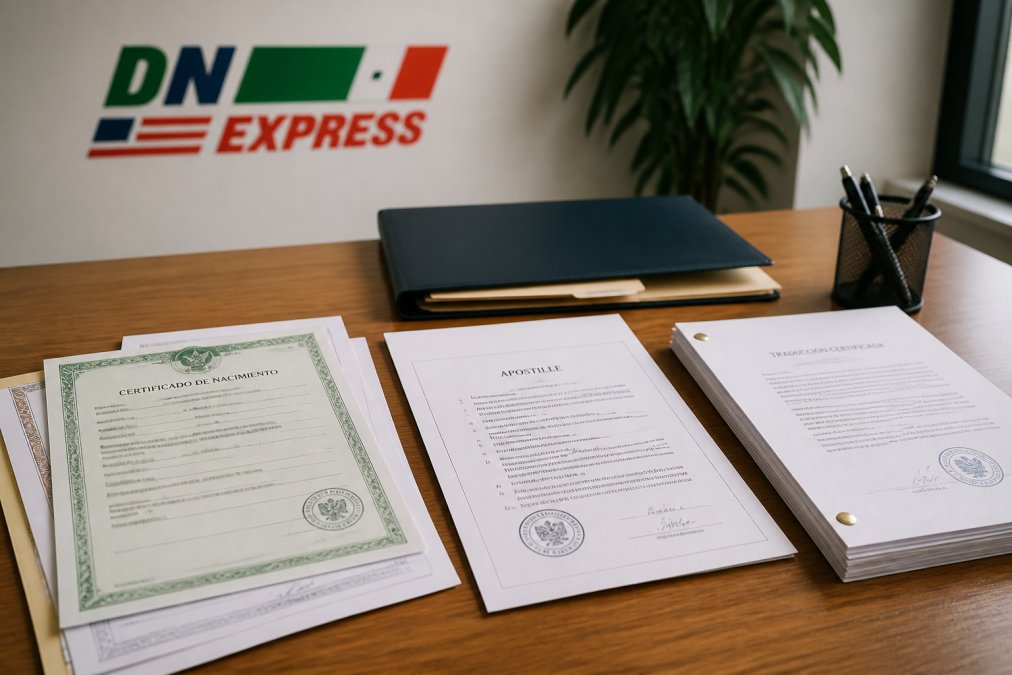
The consulate wants to see an unbroken chain: your parent was Mexican → you are their child → therefore you qualify. Every document should support one part of that chain.
Mexican Dual Citizenship Processing Time and Consulate Steps
Processing time for Mexican dual citizenship applications varies based on your chosen pathway, your consulate’s workload, and document completeness. Processing time for Mexican dual citizenship applications varies based on your chosen pathway, your consulate’s workload, and document completeness.
Consulate-Free vs. In-Country Processing: A Strategic Decision Framework
You have two main pathways to register for Mexican citizenship after your parent’s death. Each has distinct advantages, timelines, and best-use scenarios.
Consulate Processing (U.S.-Based)
You gather all required documents and obtain apostilles, submit your complete file to the Mexican consulate serving your area, the consulate forwards it to the appropriate civil registry office in Mexico, and you receive your Mexican birth certificate by mail. Timeline: 4-8 months typically (consulate review 2-4 weeks, forwarding 1-2 weeks, registry processing 2-4 months, return mail 1-2 weeks).
In-Country Processing (Mexico-Based)
You travel to Mexico, visit the civil registry office in the municipality where your parent was born, submit your file in person, and resolve any issues immediately with registry staff. You typically receive your Mexican birth certificate within 2-4 weeks. Timeline: 2-4 weeks typically (travel and submission 1-2 days, registry processing 2-4 weeks).
Comparison Table
| Factor | Consulate (U.S.-Based) | In-Country (Mexico) |
|---|---|---|
| Timeline | 4-8 months | 2-4 weeks |
| Travel Required | No | Yes |
| Problem-Solving | Remote (slow) | In-person (fast) |
| Document Issues | Weeks to resolve | Days or same-day |
| Cost | Lower (no travel) | Higher (travel, lodging) |
| Complexity Tolerance | High (must be thorough upfront) | Lower (can adjust in person) |
| Best for | Complete files, no travel ability | Incomplete files, can travel |
What Happens at Each Stage
Stage 1: Document Gathering and Apostille (Before Submission)
You must collect all required documents, obtain apostilles on all documents issued outside Mexico, obtain notarized English translations of all Mexican documents, and organize your file in the order requested. This stage typically takes 4-12 weeks.
Stage 2: Submission and Initial Review
If using consulate pathway: Submit your complete file to the Mexican consulate in your jurisdiction. The consulate verifies documents are present and apostilled, checks that translations are notarized and complete, and requests any missing documents or clarifications. This review takes 2-4 weeks.
Stage 3: Processing by Mexican Civil Registry
Once your file is accepted, the Mexican civil registry verifies your parent’s birth record, confirms your parent’s Mexican nationality at the time of your birth, confirms the parent-child relationship, checks for legal barriers to your claim, and creates your official Mexican birth certificate.
Stage 4: Delivery of Your Mexican Birth Certificate
If using consulate pathway: The registry mails your Mexican birth certificate to the consulate, which then mails it to your U.S. address, adding 2-3 weeks.
How to Decide: Consulate vs. In-Country
Ask yourself: Are your documents complete and error-free? Can you travel to Mexico? Do you have time flexibility? Are you comfortable with Mexican bureaucracy? Do you have document discrepancies or missing records?
Many applicants choose the in-country pathway specifically because they have incomplete documentation or minor discrepancies. Resolving these issues in person, with registry staff present, is often faster than mailing corrections back and forth for months.
Working With the Mexican Consulate
If you choose the consulate pathway, visit the official Mexican Ministry of Foreign Affairs website to locate the consulate serving your area. Most consulates accept applications by mail or in person. Mexican consulates charge a fee for citizenship registration, which varies by consulate.
Do not submit your original documents to the consulate. Submit certified copies only. Keep originals in a safe place.
Handling Document Discrepancies and Name Corrections
Document discrepancies are extremely common and usually solvable. Common discrepancies include name spelling variations, surname order differences, date mismatches, missing middle names, and maiden name variations. The consulate will flag these and ask you to correct them through your state vital records office, the civil registry where the Mexican document was issued, or a notarized explanation.
Don’t ignore discrepancies and hope the consulate overlooks them. A small name variation that you clarify upfront takes weeks to resolve. The same issue discovered during review can stall your application for months.
Common Mistakes to Avoid
Most delays and rejections stem from preventable mistakes: submitting documents without apostilles, using non-certified translations, incomplete lineage documentation, waiting to gather documents, not correcting discrepancies before submission, assuming one document is enough, and filing without professional review.
Frequently Asked Questions
Can I claim Mexican citizenship if my parent is deceased but I have their birth certificate?
Yes. Mexican nationality law allows citizenship by descent through deceased parents. You’ll need to obtain or request your parent’s birth certificate from the civil registry, then use it to establish your lineage through consular registration or post-mortem registration. The key requirement is proving the direct blood relationship and your parent’s Mexican nationality at the time of your birth, not whether they are living.
What documents do I need if my parents’ original birth certificates are lost or destroyed?
You have legal alternatives. Request certified copies from the civil registry in the municipality where your parent was born. If those don’t exist, you can use secondary documents such as marriage certificates, baptismal records, census records, or naturalization papers to establish parentage. An immigration lawyer or consulate can advise which combination of documents will satisfy your specific situation.
How long does Mexican dual citizenship processing take when parents are deceased?
Processing time varies. Consulate-based applications can take several months after submission, though complex cases with missing documentation can extend beyond that. In-country registration may take longer depending on the civil registry workload. Post-mortem registration adds additional time for legal verification. Your timeline depends on document completeness and consulate jurisdiction.
What’s the difference between consulate registration and in-country registration for deceased parents?
Consulate registration allows you to apply through a Mexican consulate in your country of residence without traveling to Mexico. In-country registration requires you to travel to Mexico and apply directly through local civil authorities. For those with complete documentation, consulate processing can be a straightforward option. In-country processing may be necessary if your consulate cannot verify your lineage or if your parents’ records require correction through local civil courts.