Table of Contents
- What a Mexican Citizenship Document Review Covers
- Mexican Consulate Document Requirements 2026
- How to Book a Document Review Before Your Consulate Appointment
- Mexican Dual Citizenship Application Checklist
- Common Mistakes in Mexican Citizenship Applications
- Digital vs. Physical Document Preparation
- Frequently Asked Questions
Last Updated: September 28, 2026
What a Mexican Citizenship Document Review Covers
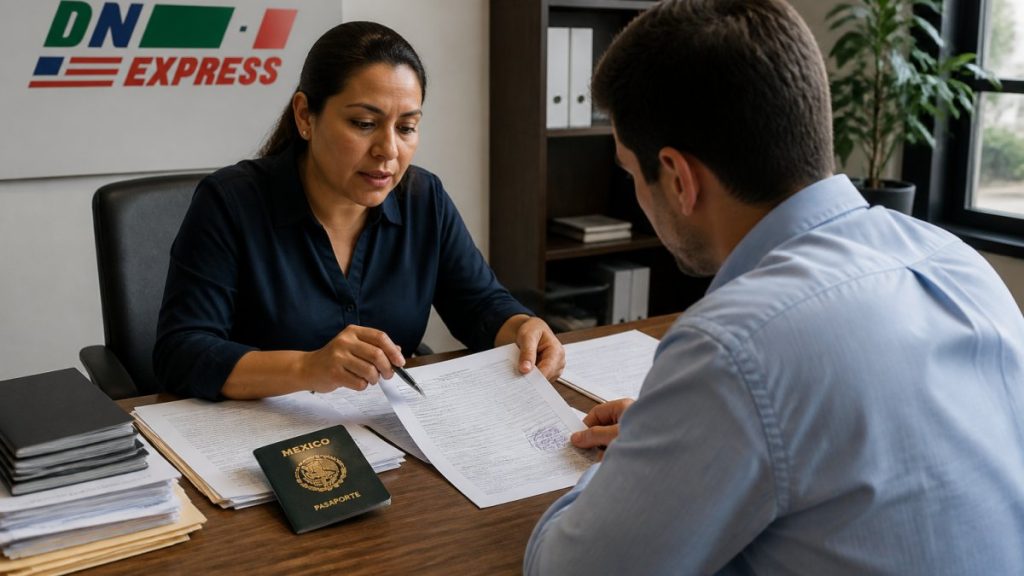
A Mexican citizenship document review is a line-by-line audit of every paper in your application before it reaches a consulate window. It confirms your eligibility, checks your birth certificate and apostille, and catches name or date mismatches that get files rejected. This guide from Doble Nacionalidad Express (DNExpress) walks through how to book mexican citizenship document review services, what reviewers actually check, and how to avoid the mistakes that stall applications for years.
Here’s the part most people learn the hard way: consulates do not fix problems for you. They reject and hand the file back.
A review catches those problems while they are still cheap to fix.
Eligibility Check Before You Pay for Anything
Eligibility comes first, because no amount of document review fixes a case you do not qualify for. Mexican nationality law grants citizenship by descent through a parent or, in many cases, a grandparent.
Key questions a review answers:
- Was your parent or grandparent born in Mexico?
- Were they still Mexican citizens when you were born?
- Do you have official records proving each link in the chain?
Document Verification: Birth Certificates, Apostilles, and Translations
Document verification is where most applications live or die. Three items carry the most weight:
- Your Mexican birth certificate or your parent’s, pulled from the civil registry
- The apostille on any U.S. document, issued by the correct state authority
- Certified translations prepared by a translator the consulate accepts
Never submit a photocopy where an original or certified copy is required. Consulates treat uncertified copies as missing documents, and you lose your appointment slot while you resupply the file.
Mexican Consulate Document Requirements 2026
Mexican consulate document requirements 2026 center on four categories: identity, lineage, civil status, and authentication. Each consulate publishes its own checklist, and the details vary more than most people expect.
The core requirements include:
- Valid photo ID, such as a passport or consular ID
- A completed application form
- Proof of Mexican lineage through birth certificates
- Apostilled and translated supporting documents
- Passport photos meeting current specifications
- Payment of the application fee
| Requirement | What It Proves | Common Problem |
|---|---|---|
| Birth certificate | Parental lineage | Name spelling mismatches |
| Apostille | Document authenticity | Wrong state authority |
| Certified translation | Readability for officials | Translator not accepted |
| Photo ID | Identity match | Expired documents |
| Application form | Intent to register | Incomplete fields |
How to Book a Document Review Before Your Consulate Appointment
Booking a review starts with gathering your documents, then scheduling a consultation before you book the consulate appointment itself. The order matters. A review takes time, and consulate slots fill quickly, sometimes within minutes of release.
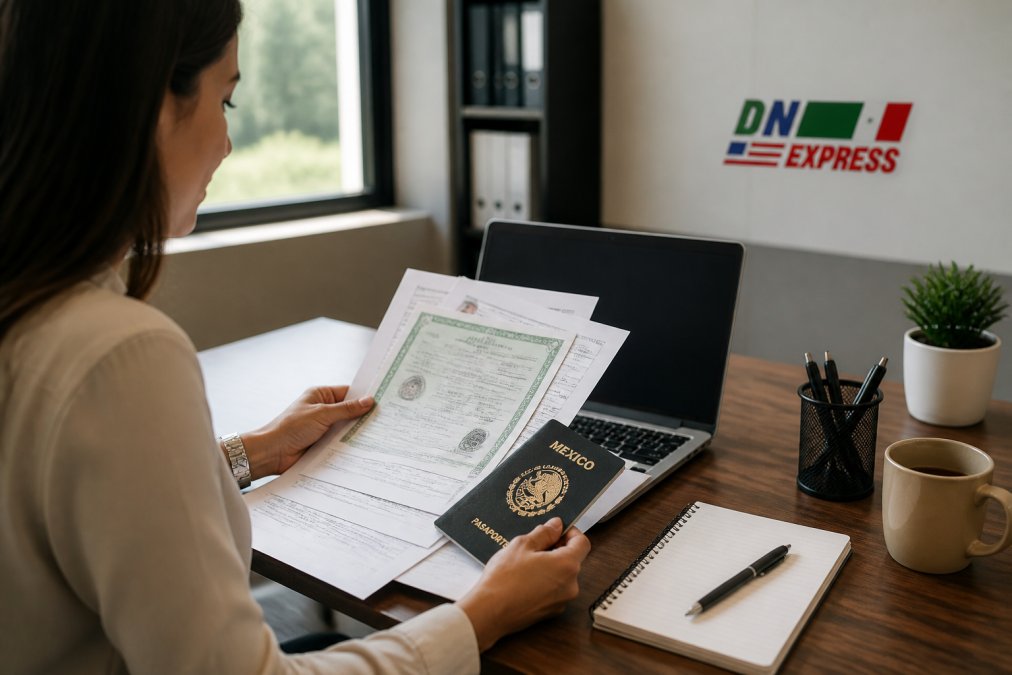
Here is the sequence that works:
- Collect every document you have, including old and partial records
- Request an eligibility consultation to confirm your case is viable
- Book the document review and submit digital scans
- Receive a findings report listing gaps and discrepancies
- Fix flagged items, then schedule your consulate appointment
What a Findings Report Actually Contains
A useful review does not just say “approved” or “rejected.” It produces a written findings report you can act on. A strong report typically includes:
- A discrepancy log, every name, date, and place that does not match across documents, with the exact documents and line items involved
- A document status column, marked as accepted, needs correction, needs replacement, or missing
- The correction path for each flagged item, which agency issues the fix (state vital records office, county clerk, Mexican civil registry, or the consulate itself)
- An estimated fix timeline per item, because a state-issued amended birth certificate can take weeks, while a translator correction can take a day
- A sequencing recommendation, which fixes must happen before others, since some corrections depend on prior ones
Timing the Review Against the Consulate Appointment
A common pattern is to book the consulate appointment first because slots are scarce, then discover the review flags an issue that cannot be fixed before the appointment date. The result is a wasted slot and a rebooking wait that can stretch months at high-demand consulates.
A safer sequence:
- Start the review before you book the appointment. Even a partial review on the documents you already have will surface the most common blockers.
- Ask the reviewer for a realistic “ready date”, the earliest date your file could plausibly be clean.
- Book the consulate appointment for a date after that ready date, not before.
- Keep the review open until the appointment. New issues sometimes surface when you assemble the physical package.
Book your review first, not your appointment. Reviewers regularly find issues that take weeks to fix, and a consulate slot you cannot use is harder to replace than one you never booked.
Consulate-Specific Appointment Tips
Appointment systems differ by location, and that is the single biggest source of wasted trips. Some consulates release slots on a fixed weekly schedule. Others use waitlists that move fast when cancellations appear. A few publish nothing and rely entirely on a portal that refreshes unpredictably.
A few habits that help:
- Check the booking portal at the same time each day, and note the exact time new slots appear, patterns emerge within a week
- Have your documents scanned and ready before you book, because some portals time out during the booking flow
- Confirm which services your chosen consulate actually handles, not every location processes citizenship registrations
- Arrive with originals plus copies of everything
- If the portal shows no availability, check whether the consulate uses a separate waitlist system you must join independently
Navigating Regional Consulate Portals
Most consulates run their own appointment portal, and the user interface, release schedule, and required fields vary. A few practical patterns:
- Some portals require you to select a service category before showing availability. Choosing the wrong category can hide open slots.
- Some portals lock you out for a period after a missed appointment. If you cannot attend, cancel rather than no-show.
- Some portals require a CURP or pre-registration number before booking. If you do not have one, that step comes first.
- Some consulates release slots in batches on a specific day of the week. Others trickle them out continuously.
Do not assume a slot you see is for citizenship registration. Some portals list multiple service types under similar names, and booking the wrong one means starting over.
Mexican Dual Citizenship Application Checklist
A mexican dual citizenship application checklist keeps you from missing items that delay review by months. Print it, work through it, and check each line before you submit.
- Eligibility confirmed through parental lineage
- Mexican birth certificate obtained from the civil registry
- U.S. documents apostilled by the correct state authority
- Certified translations completed and accepted
- Name, date, and CURP discrepancies resolved
- Application form completed without blank fields
- Passport photos meeting current specifications
- Application fee payment ready
- Copies made of every original document
Common Mistakes in Mexican Citizenship Applications
Common mistakes in mexican citizenship applications almost always trace back to preparation, not eligibility. Most applicants qualify. Fewer submit a clean file.
The repeat offenders:
- Submitting documents before resolving name or date mismatches
- Using a translator the consulate does not accept
- Requesting an apostille from the wrong state authority
- Assuming one consulate’s checklist applies everywhere
- Waiting until an appointment is booked to start gathering records
When Documents Get Rejected: How to Fix Discrepancies
Rejections are fixable, but the fix depends on where the error lives. If the mistake is in your U.S. record, you amend the U.S. vital record through the issuing state. If it is in the Mexican record, you pursue a birth certificate correction through the civil registry.
Digital vs. Physical Document Preparation
Digital preparation speeds up the review. Physical preparation is what the consulate actually accepts at the window. You need both, and mixing them up causes problems.
| Stage | Format Needed | Why |
|---|---|---|
| Eligibility consultation | Digital scans | Fast turnaround |
| Document review | Digital scans | Easy markup and feedback |
| Discrepancy fixes | Originals | Required for amendments |
| Consulate appointment | Originals plus copies | In-person verification |
| Passport issuance | Originals | Biometric data collection |
Treat digital and physical prep as two separate tracks. Get everything scanned for review first, then assemble the physical package only after the review clears your file.
Frequently Asked Questions
Can I get my Mexican citizenship documents reviewed before my consulate appointment?
Yes. A pre-appointment document review lets you catch name mismatches, missing apostilles, and expired records before a consular officer sees them. Many applicants use a review service to verify birth certificates, certified translations, and identification forms against consulate requirements. This step reduces the chance of a same-day rejection and a new appointment wait, which can run weeks or months depending on the consulate.
What documents are required for Mexican dual citizenship by descent?
You typically need your foreign birth certificate, a Mexican parent’s or grandparent’s birth certificate, government-issued photo ID, and proof of parental lineage. Mexican birth certificates often need an apostille and a certified translation if issued abroad. Some consulates also ask for a voter card, CURP, or Matricula Consular. Requirements vary by consulate location, so confirm the exact list before your appointment.
How long does a Mexican citizenship document review take?
A straightforward review can finish in a few days if your records are clean. Cases with name discrepancies, missing apostilles, or civil registry corrections can take weeks, since fixing a birth certificate or CURP mismatch often requires correspondence with relevant authorities. Start the review at least three to six months before any deadline, such as a property purchase or relocation.
What happens if my application is rejected due to a document discrepancy?
Rejection usually means the consulate wants a corrected document, not a denied case. Common fixes include amending a U.S. vital record, correcting a Mexican birth certificate, or obtaining a certified translation. A document review service can identify these issues early and handle the correction process, so you resubmit a complete application package instead of starting over.