

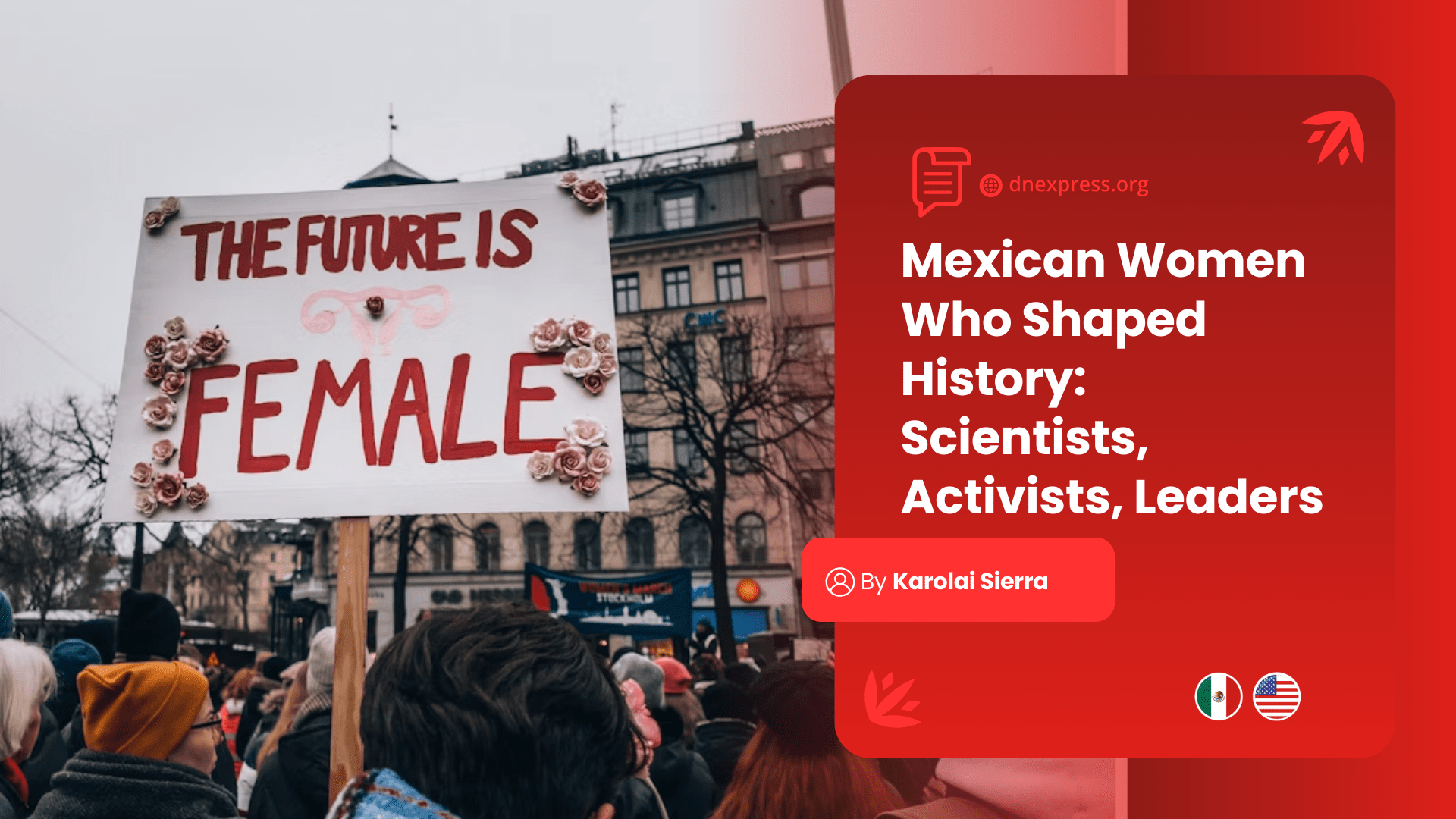
March 8 is International Women's Day. It's not a date to celebrate but to commemorate the women who have dedicated their lives to pave the way for the rest of us. It's a day to honor their activism and altruism. It's a day to remember those who have thrived in a system designed to their disadvantage. It's a day to remember those who have lost their lives for the ones who survived.
Just like in the rest of the world, women in Mexico are facing gender inequality, gender-based violence, and wage inequality. But there's something else here — for me it seems to be rage and anger. Every year Mexican women use March 8th to manifest their discontent with the system that's still a work in progress. They use the streets of Mexico to remind everyone that they are detrimental to the development of the country, and advocate for labor and reproductive rights. This year at DNEXPRESS, we can to remember Mexican women have shaped diplomacy, science, activism, and culture, often in systems designed for their counterparts.
Hermila Galindo: A Revolutionary Woman
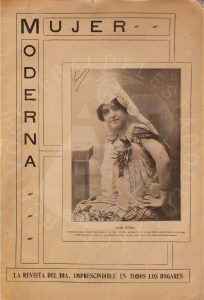
Revista Mujer Moderna
Hermila advocated for women's suffrage and sex education. As founder of the feminist magazine La Mujer Moderna, she opened discussions about women's sexuality. She was the first woman to run for federal office in Mexico in 1917, marking the beginning of women's representation in the field.
She helped lay the foundation for women's political participation decades before suffrage was achieved in 1953. In my opinion, she was one of the most important pioneers for Mexican women in politics, and more importantly, for Mexican women's rights in the country. She spoke about equality before Mexico was ready for that conversation.
Palma Guillén:
Palma Guillén was a pioneer for Mexican women in diplomacy. Her path toward leadership was influenced by a life surrounded by intellectual women. One of her closest friends was Gabriela Mistral, the celebrated writer and Nobel Prize winner in Literature (1945).
In 1935, Guillén was appointed by the Mexican Ministry of Foreign Affairs to serve as Extraordinary Envoy and Minister Plenipotentiary, first in Colombia and later in Denmark.
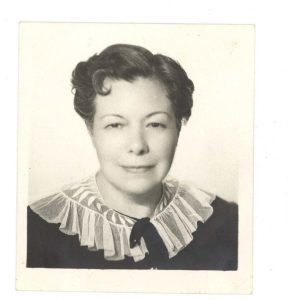
She became Mexico's first female ambassador and the first Mexican woman to hold such a high diplomatic post during the interwar period. Since 2024, Mexico has implemented affirmative action policies, such as targeting 60% of promotions per rank for women, to increase their presence in top diplomatic roles.
Ellen Ochoa
Born to a Mexican-American father and an American mother in California, NASA chose Ellen to join her first space mission on April 8, 1993. She was the first Latina to go into space. She tried to become an astronaut twice before being admitted into the program after her third attempt in 1990. She had been working at NASA Ames Research Center, and this brought her closer to her dream of becoming an astronaut.
After her trips to space, she continued to work for NASA, becoming the deputy director of the Johnson Space Center in 2007. However, her journey did not stop there. She was promoted to director of the center in 2013, becoming the first Latina director and the second woman to hold the position.

Truly an inspiration for Mexican and Hispanic women around the world who want to pursue STEM careers. They can now have representation and see themselves in talented and dedicated people. Mexican women can often be tied to the entertainment industry and similar careers.
Having scientific achievements from a Mexican-American woman adds another dimension to being a Latina. We are made for everything, with no exception.
Beatriz Barba
First Mexican woman archaeologist. Barba was the first woman to major in archaeology in Mexico. In 1955, she graduated in Anthropological Sciences with her thesis titled “Tlapacoya,” obtaining cum laude recognition. However, throughout most of her career she mentioned how many others had pursued their interest in the field years before.
Beatriz believed that she was very lucky to find a husband who was also an archaeologist, and therefore understood that she needed to participate in field studies for months and wear “men's clothes,” which back then was frowned upon.
Her work contributed to Mexico's cultural heritage, and she dedicated her life to the country not only as an archaeologist but also as a teacher and ethnologist.
She also participated in a labor union to improve the salaries of researchers (anthropologists), who in the 1960s earned less than kindergarten teachers. She broke gender barriers in anthropology and field research.
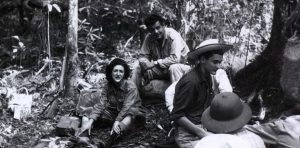
In interviews, she always made sure to mention how women in her field suffered gender-based aggressions in the last century. She documented history and was part of it.
“Fortunately, I married a man who understands that women need, just like men, to fulfill themselves. To be someone, to have a life.” — Beatriz Barba
Dolores Huerta
This amazing woman is a labor force leader and civil rights activist dedicated to improving farmworkers' labor rights in the US. Serving as vice president of the United Farm Workers (UFW), Huerta proved herself a dynamic protest leader, a compelling activist, and a steadfast contract negotiator.
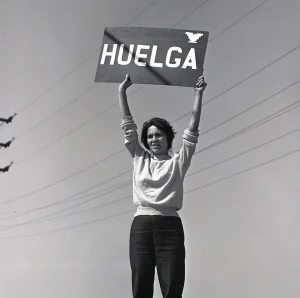
Her efforts not only transformed the lives of farmworkers but also helped redefine what it meant to be a woman in leadership. Did you know we owe her “¡Sí, se puede!”?
Emma Tenayuca
Emma Tenayuca was a trailblazing Mexican American activist who dedicated herself to labor organizing and civil rights. In the 1930s, she mobilized female workers across Texas, leading a powerful series of strikes at a time when the Great Depression had pushed countless Americans to the brink.
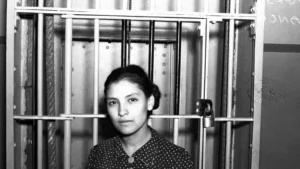
While New Deal legislation had opened the door for workers to unionize and push for improved conditions, it took passionate leaders like Tenayuca to actually walk people through it. By rallying her community around a shared cause, she sparked a movement that resonated with workers far beyond the borders of Texas.
Purple and Green
These two colors shower Mexico City every March 8th. Women walk the streets with signs demanding equity, but also with purple and green handkerchiefs around their hair, necks, and hands.
You might be familiar with purple representing feminist core values, but what does the green represent? The “green tide” started in Argentina to symbolize life and the fight for reproductive rights.
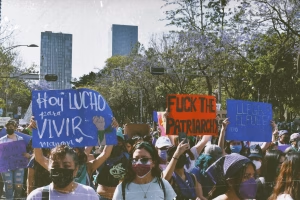
Mexican women are not only part of the country's history, they are shaping the future of the nation. These are just a few examples of the accomplishments of talented Mexican women in the last and current century. I know it may seem like a blog about who was “first” to do something, but it's truly about beginnings.
March 8th is a reminder of unfinished work, a reminder that the fight has not stopped. It's a date to remember those who paved the way for equity and gave their lives to the cause.
To commemorate March 8 is to remember that every right Mexican women hold today was once radical, once unrealistic, once frowned upon. The greatest gift we can give to those who made it possible for us to participate in society is to continue their legacy by becoming what we desire to be.