Table of Contents
- Mexican Consulate Documents: What You Need in 2026
- Proof of Nationality and Official Identification Requirements
- The Mexican Passport Application Process in 2026
- Mexican Consulate Appointment Availability and Scheduling
- Proof of Financial Solvency for Mexican Visas
- Fees, Processing Times, and Payment Methods
- Common Rejection Reasons and How to Fix Document Discrepancies
- Frequently Asked Questions
Last Updated: September 14, 2026
Mexican Consulate Documents: What You Need in 2026
The Mexican consulate document requirements 2026 boil down to five categories: proof of nationality, official photo identification, a completed application form, supporting civil records, and payment of processing fees. Each has its own rules about originals, copies, and translations.
This guide covers every category, the appointment system, the financial threshold for visa applicants, and common rejection patterns.
Documents Required for Adults
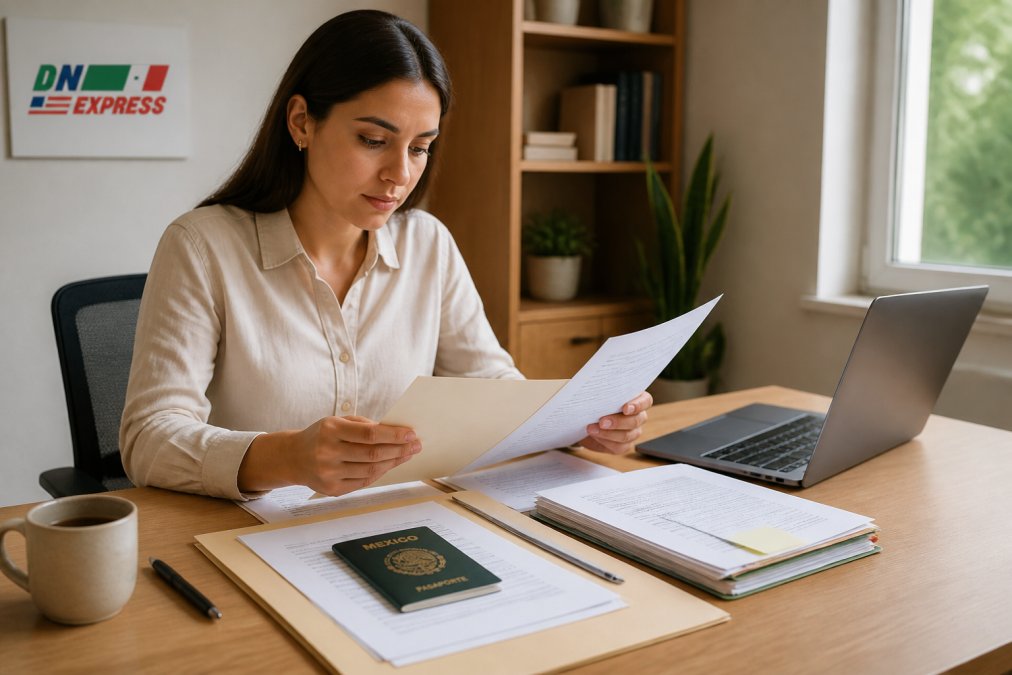
Adults need a valid passport or government photo ID, a completed application form, proof of nationality, and the fee receipt, plus civil documents establishing your identity chain: birth certificate and, where relevant, marriage or divorce records.
For passport applications specifically, the U.S. Department of State guidance on dual nationality confirms that U.S. citizens may hold a second passport without renouncing their U.S. citizenship. That matters because many applicants hesitate before starting.
Bring originals and photocopies. Consular staff verify originals in person and keep the copies.
Family and Minor-Specific Nuances
Minors need both parents present, or a notarized consent letter from the absent parent, a common reason family appointments get turned away at the window.
For children under 18, the consulate typically requires:
- The child’s birth certificate showing both parents
- Both parents’ official identification
- Notarized authorization if one parent cannot attend
- School ID or another photo document for older children
Third-generation applicants often assume they do not qualify, but eligibility runs through a parent or grandparent born in Mexico, proving that link is a documentation exercise, not a legal dead end.
Arriving without the second parent’s notarized consent is the single fastest way to lose an appointment slot. Consulates rarely reschedule same-day, and some offices require you to book a new date weeks out.
Proof of Nationality and Official Identification Requirements
Proof of nationality is the spine of every application. A Mexican birth certificate is strongest, but a parent’s or grandparent’s Mexican birth certificate combined with your own foreign birth certificate can establish the chain.
Acceptable proof typically includes:
- A Mexican birth certificate issued by a civil registry
- A certificate of Mexican nationality
- A naturalization letter, where applicable
Official identification means a valid passport, consular ID, or government-issued photo card. Expired documents do not count; staff check expiration dates first.
Original Documentation, Apostille, and Certified Translation
Foreign-issued documents usually need an apostille and a certified Spanish translation. The apostille confirms the signature is genuine; the translation makes it readable to the reviewing officer.
Notarized copies are not the same as apostilled originals. Many applicants learn this distinction the hard way.
Request apostilles from the issuing state’s Secretary of State office, not from a third-party expediter, when you have time. The direct route is cheaper and produces a clean paper trail that consular staff recognize immediately.
The Mexican Passport Application Process in 2026
The Mexican passport application process 2026 starts online, not at the consulate window: book through the consulate’s scheduling system, complete the form, pay the fee, then attend in person for biometrics and document verification.
The sequence looks like this:
- Confirm your nationality documentation is complete and consistent
- Complete the application form with names spelled exactly as they appear on your birth certificate
- Pay the processing fee through the approved channel
- Book an appointment at your nearest consulate
- Attend in person with originals, copies, and the payment receipt
- Provide biometric data: photograph, fingerprints, signature
Name consistency across every document is the variable that decides how smoothly this goes.
Mexican Consulate Appointment Availability and Scheduling
Mexican consulate appointment availability varies sharply by office and season. Larger consulates release slots in batches, and popular locations fill within hours.
A few practical habits improve your odds:
- Check the scheduling portal early in the morning on weekdays
- Book the moment a slot appears rather than comparing dates
- Keep a scanned document set ready so you can confirm instantly
- Expect longer waits before major holidays and in the spring
If you need help securing a slot, the consular appointment guidance published by the Mexican government explains the official booking channels and warns against unauthorized resellers. For applicants who would rather not navigate the portal themselves, DNExpress offers a passport appointment service that handles the booking on your behalf.
Proof of Financial Solvency for Mexican Visas
Proof of financial solvency for Mexican visas means demonstrating you can support yourself without working locally. Consulates review official bank-issued statements over a set lookback period, assessing the average monthly balance rather than any single day’s closing balance.
Reviewers want to see:
- Bank statements issued directly by the financial institution, on letterhead or with a verifiable digital signature
- A lookback window that matches what the specific consulate requests, commonly the most recent three to six months
- Accounts held in the applicant’s name, not a spouse’s or a parent’s, unless that person is a co-applicant
- A consistent monthly balance that clears the consulate’s published threshold for the visa category
- Statements in the original language, with a certified Spanish translation if the bank issues them in English
Salaried vs. Self-Employed Documentation
Salaried applicants submit pay stubs alongside bank statements so the reviewer can trace deposits to a verifiable employer. Self-employed applicants need business bank statements, tax returns, and an accountant’s letter confirming ongoing income; files get flagged when the personal account shows irregular deposits without supporting business documentation.
Currency and Foreign Accounts
Foreign-currency accounts are accepted, but the reviewer converts the balance using an internal rate, so a comfortable balance can fall short once converted. Confirm the conversion method with the consulate before your appointment.
What Reviewers Actually Weigh
- Average monthly balance over the full statement period, not the peak
- Stability of deposits, recurring income reads as solvency, a single lump sum reads as staging
- Whether the account is in the applicant’s name and matches the identification presented
- Whether statements are official bank-issued documents, not screenshots or printouts from a banking app
A sudden transfer the week before your appointment reads as staged. Six months of steady balances reads as solvency.
Depositing a large sum right before applying is a recognized red flag. Officers compare average balances, and a single spike often triggers a request for additional documentation, or a denial that cites insufficient evidence of sustained solvency.
Order your bank statements at least two weeks before your appointment. Some institutions mail official statements only, and a digital PDF that lacks the bank’s verification seal may be rejected at the window.
Property and Investment Alternatives
Some consulates accept real estate, investment accounts, or a third-party letter of responsibility as an alternative or supplement to bank statements. These alternatives are office-specific and stricter, deeds, brokerage statements, and notarized letters are common. Confirm what your consulate accepts before building a file around them.
Solvency is proven by pattern, not by peak. Build a six-month paper trail before you book, and the appointment becomes a formality rather than a negotiation.
Fees, Processing Times, and Payment Methods
Processing fees are set by the consulate and change periodically, so confirm the current amount on the official consular page before paying. Payment methods are limited, and the wrong channel can void your receipt.
| Stage | What You Pay For | Payment Method | Timing |
|---|---|---|---|
| Application | Consular processing fee | Bank reference or card, per office | Before appointment |
| Document prep | Apostille and certified translation | Varies by provider | Before appointment |
| Passport issuance | Passport book fee | Approved consular channel | At or before appointment |
| Corrections | Vital record amendments | Issuing authority | Before submission |
Processing times depend on the consulate’s workload and whether your documents need review. Straightforward passport renewals move faster than nationality applications with record discrepancies.
Common Rejection Reasons and How to Fix Document Discrepancies
Rejections almost always trace back to inconsistencies, not missing forms, name spelling differences, date mismatches, and documents issued under maiden names later changed. Here is each error and its correction pathway.
The Most Frequent Rejection Triggers
Name spelling drift. A mother’s maiden name may appear with an accent on one document, without it on another, or hyphenated on a marriage certificate and spaced on a birth certificate. Staff compare character by character, and a single accent difference can trigger a hold.
Date format confusion. A birth date written 03/04/1985 is March 4 in one convention and April 3 in another. When U.S.- and Mexican-issued documents use different conventions, the reviewer sees a mismatch even though both are correct.
Maiden name vs. married name. A birth certificate under a maiden name and a passport under a married name create a chain break unless a marriage certificate bridges them. Applicants who changed names more than once need every intervening record.
CURP mismatches. The CURP (Clave Única de Registro de Población) is the unique registry code assigned to every Mexican national. If the CURP on file does not match the birth certificate, different accent, surname order, or birth date, the consulate will not proceed until the registry record is corrected.
Missing apostille or uncertified translation. A foreign-issued document without an apostille is treated as unverified, and a translation without a certified translator’s stamp as unreadable. Both are fixable but add weeks.
Expired identification. Staff check expiration dates before anything else. An expired passport or consular ID ends the appointment at the window, regardless of how complete the rest of the file is.
Photo dimension errors. Passport photos must meet specific size, background, and head-position requirements. Pharmacy-kiosk photos often fail the head-size check, and the consulate does not accept a reprint, you need a new photo.
How to Fix Each One
- Name and date discrepancies: Request a correction from the issuing authority, the state vital records office for a U.S. birth certificate, the Mexican civil registry for a Mexican one. Corrections take weeks to months depending on the jurisdiction.
- Maiden/married name gaps: Obtain the marriage certificate and any divorce decrees that document each name change. These bridge the chain without requiring a correction.
- CURP mismatches: File a correction request with the Mexican civil registry. This is the slowest fix and the one most likely to push an appointment back by a full cycle.
- Missing apostille: Request it from the issuing state’s Secretary of State office. Processing is typically days to weeks, and the direct route is cheaper than a third-party expediter.
- Uncertified translation: Use a translator whose certification the consulate recognizes. Ask the consulate which certifications it accepts before paying for a translation.
- Expired ID: Renew before booking. Do not book an appointment hoping the officer will overlook an expiration date.
- Photo errors: Get photos taken at a location that follows consular specifications, and bring a spare set.
The Pre-Appointment Document Review
The highest-value step is a full document review before you book. Lay every document side by side and check name spelling, date format, and document numbers against each other. Most discrepancies are visible on a kitchen table long before they reach a consular officer.
A discrepancy discovered at the window cannot be fixed at the window. The consulate will hold the application, and in most cases you will need a new appointment, which can mean weeks of waiting for the next available slot.
When to Escalate to a Specialist
If your file involves more than one name change, a CURP mismatch, or documents from multiple countries, the correction chain can take months and requires correspondence with authorities that do not accept walk-in requests. DNExpress handles this directly: document search, translation, correction, and correspondence with Mexican authorities so discrepancies are resolved before submission rather than after rejection. That includes correcting Mexican vital records and correcting American vital records when the discrepancy originates on the U.S. side of the chain.
A document review before you book the appointment can help prevent rejections and save time and effort.
Frequently Asked Questions
What documents do I need to get my Mexican passport at the consulate?
Adults generally bring a valid photo ID, proof of nationality (a Mexican birth certificate or naturalization document), and a completed application form. If any names or dates differ between documents, the consulate may ask you to correct them first. Photo requirements are strict: white background, no glasses, neutral expression. Because rules shift year to year, confirm the current list with your consulate before your visit, and bring originals plus copies of everything.
Can I show up to the Mexican consulate without an appointment?
Most consulates will not process you without an appointment confirmation, and walk-ins are typically turned away or given only general information. Appointment slots release in batches and fill quickly, so check your consulate’s online booking system several times a week. If you have urgent travel, some offices hold a limited number of same-week slots. Booking through a service that monitors availability can save weeks of refreshing the page.
What is the difference between a temporary and permanent residence visa?
A temporary residence visa covers stays up to four years and is renewable, while permanent residence has no expiration and grants broader rights, including work without extra permits. Both usually require proof of financial solvency for Mexican visas, shown through bank statements or income. Temporary status is often the faster path if you are buying property or testing life in Mexico; permanent status suits people planning to stay long term.
How do I schedule an appointment at a Mexican consulate in 2026?
Create an account in the consulate’s online appointment system, choose your service type, and select from available dates. You will receive an appointment confirmation with a barcode; print it and bring it with you. Slots for passport and citizenship services often open 4-8 weeks out. Check early morning and late evening, when cancellations frequently reappear. If your local consulate is booked solid, some applicants travel to a less busy office in another state.
What happens if my name or date of birth differs between my U.S. and Mexican documents?
Mismatched names, maiden names, or dates are one of the most common rejection reasons. The consulate will usually pause your application until the records match. Fixing this means amending the incorrect vital record, which can require a notarized copy, apostille, or certified translation. A document correction service can handle the back-and-forth with both U.S. and Mexican authorities so your file is consistent before you submit it.
How long does the whole process take from start to finish?
Timelines vary widely. A straightforward passport renewal might take a few weeks once you have an appointment, while citizenship or residency applications with document corrections can run several months. The biggest delays come from appointment availability and fixing discrepancies in old records. If you are buying property or relocating on a deadline, start the document review early. A professional service can flag problems before they cost you months.