
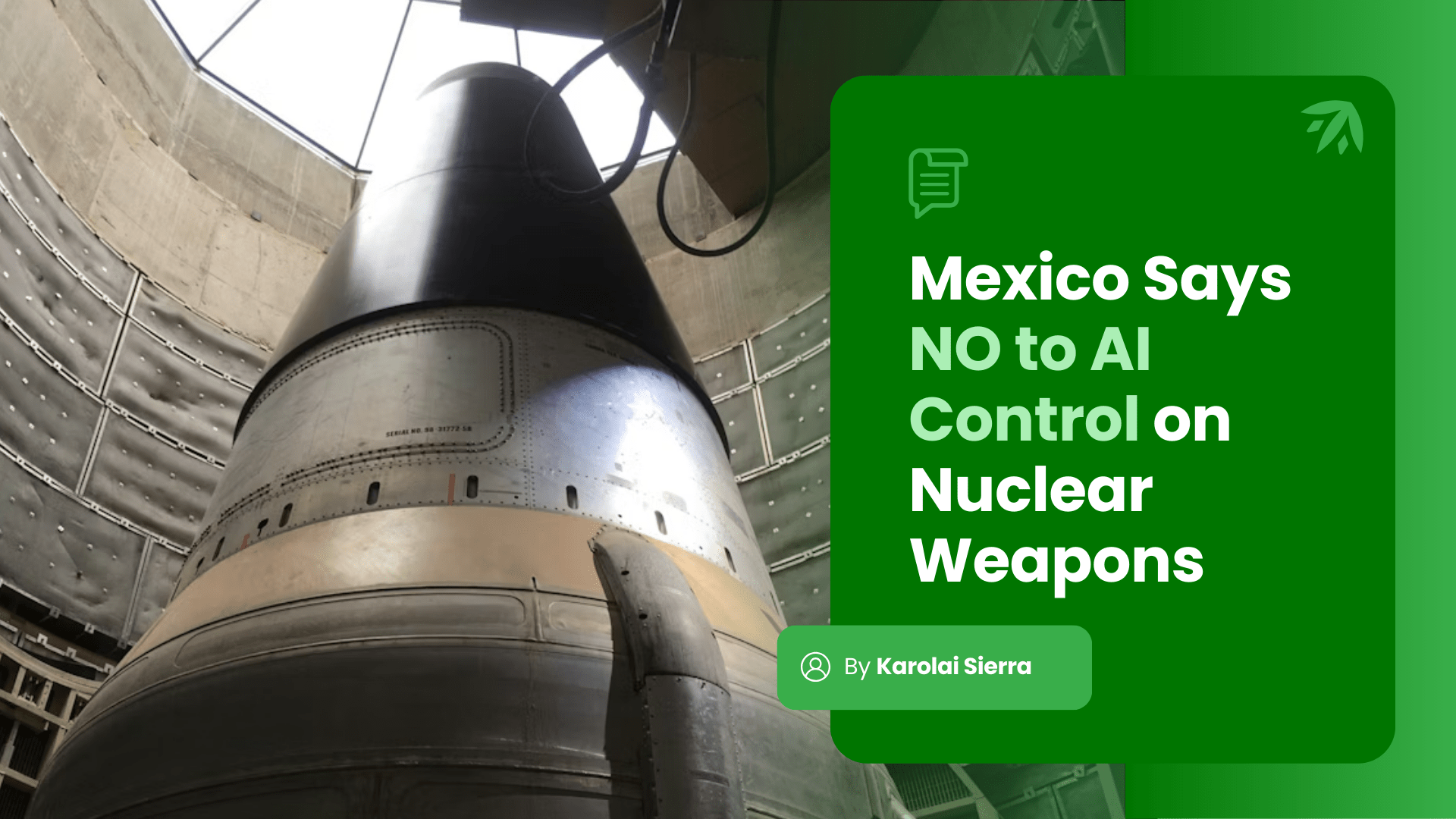
During November of 2025 the General Assembly discussed the implications of having AI tools involved in nuclear weapon control. Mexico took the lead by proposing a resolution about the matter. Fortunately, the response was positive, and received widespread international support with more than 115 votes in favor.
The voting went like this: 115 States voted in favor of the resolution, eight voted against it, and 44 abstained from voting. To the surprise of no one, countries who possess nuclear weapons voted against it. On the contrary, most countries without nuclear weapons firmly supported the Mexican proposal.
According to Alice Saltini in an article for the Bulletin of the Atomic Scientist “The resolution is a major steppingstone because it nudges the debate beyond the baseline notion of “keeping humans in control of nuclear weapons decisions” towards a more fine-grained recognition of how AI could fuel unintended escalation in decision processes. Moreover, the negotiations and the voting patterns show how states currently understand the AI-nuclear nexus, where their concerns lie, and what they are prepared to put on paper.”
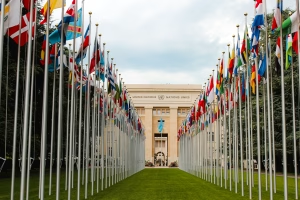
United Nations
Mexico’s stance on nuclear weapons is not recent. It’s simply consistent with what the nation has been doing before. The country's diplomatic stance has been vastly against nuclear weapons. One of the central milestones is the Treaty of Tlatelolco, signed on February 14, 1967, in Mexico City.
This agreement, the result of the work of Alfonso García Robles, who was awarded the Nobel Peace Prize in 1982. Many great accomplishments for the global south came after that. Thanks to this treaty a regional commitment was forged to prohibit the development, manufacture, possession, and testing of nuclear weapons in Latin America and the Caribbean.

The document has been recognized by UNESCO as a documentary heritage of global value. Today, Mexico ensures its compliance and serves as a regional monitoring center through OPANAL. This resolution is only a reminder that Mexico has and will continue to stand up for peace. Mexico essentially created the largest nuclear free zone thanks to this treaty. If you are not into documented research in paper, we suggest the following video from the channel: History.Culture.Project on Youtube.
Is Mexico the safest corner of the planet? No it’s not. But I like to believe that we all would like to live in a country where every effort is made towards peace and not war. Where your tax money is returned as benefits for the improvement of the country and not on military power that can potentially never be used, and even worse, weapons that threaten the entire human race.
Click Here and Watch the Video!
Mexico's effort at the UN reflects its longstanding commitment to nuclear disarmament, rooted in the Treaty of Tlatelolco and a tradition of active diplomacy aimed at ridding the world of nuclear weapons. Beyond its resolution on artificial intelligence, Mexico also championed several other measures adopted by the General Assembly, among them initiatives concerning the Treaty on the Prohibition of Nuclear Weapons, the humanitarian impact of nuclear arsenals, and the moral case for a world without nuclear weapons.
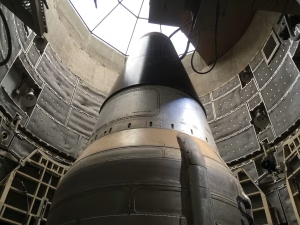
UN backs Mexico's proposal to prevent the use of AI to control nuclear weapons.
Mexico noted before the UN that there are currently more than 12,000 nuclear weapons in existence, warning about the catastrophic humanitarian impact their use would entail. Today, Mexico ensures its compliance and serves as a regional monitoring center through OPANAL.
At DNE, we encourage research. If you are interested in reading the entire resolution you can visit the UN digital library by clicking here.